Best PropTech Lead Generation Agencies 2026 Compared
The short answer
PropTech software vendor acquisition is not the same as generating property enquiries for an agent, broker or developer. A property management platform, brokerage tool, asset management system, facilities product and real estate finance platform reach different organisations and buying groups. Define the product category, portfolio segment, account market, approved evidence and accepted pipeline result before comparing providers. Then verify channel ownership, qualification, CRM evidence and client asset ownership. No provider is best for every PropTech company.
Each company links to an official product page or primary source relevant to this guide. Monogram tiles identify the referenced organisation and do not imply endorsement.
The best PropTech lead generation agencies for a practical shortlist are Bay Leaf Digital, StarReach, Bill Rice Strategy Group, Leadriver, Leapyn and Provena. Bay Leaf Digital and Leapyn publish broad sector marketing services. StarReach and Leadriver centre direct outreach and qualification. Bill Rice Strategy Group connects positioning, owned content, search and fractional leadership. Provena connects account research, outbound, organic content, conversion and pipeline qualification. Choose by product category, property buyer, channel boundary and sales accepted outcome.
Which PropTech lead generation agency fits the actual acquisition constraint?
Live search results mix direct lead generation, full service marketing, content and search, paid acquisition, fractional leadership and consumer real estate lead services. Those operating models do not transfer the same responsibility. PropTech itself also spans property management, brokerage, asset management, facilities, building operations, marketplaces, investment data and real estate finance. Before comparing providers, the outsourced lead generation pricing guide explains how per meeting, per lead and retainer pricing shift the risk. The answer must fit the buyer, the people doing the work and the evidence available after launch. A fashionable platform or generic checklist cannot repair weak targeting or unclear ownership.
Write one acquisition brief that names the product workflow, target property organisation, portfolio type, geography, company size, buying group, contract value, sales cycle, current funnel constraint and sales accepted result. Exclude agents, consumers, tenants, investors or property projects that are not actual software buyers. Compare every provider against that same brief. Write the desired business outcome first, then define what must be true for it to occur and which risks require a human decision.
Which criteria matter when assessing PropTech lead generation agencies?
We reviewed live search results and current official provider pages on 29 August 2026. Inclusion required a dedicated PropTech or real estate software route and enough first party detail to identify the service boundary, target buyer and handoff. We compared published scope, buyer fit, channels, qualification, commercial signals and asset ownership. We excluded directories, paid rankings, affiliate lists and unsupported universal scores. For PropTech lead generation agencies, we used documented capability and practical fit. No paid placement, invented scores or unsupported performance claims were used. Check current pricing and packaging directly.
Choice
Best fit
Core strength
Main tradeoff
Bay Leaf Digital
PropTech and real estate SaaS companies seeking broad sector marketing across positioning, search, paid acquisition, content, conversion and lifecycle work
a dedicated real estate SaaS route covering several property technology categories, buyer groups and full funnel marketing services
the broad service boundary is a larger purchase than a contained direct outreach or appointment setting test
StarReach
PropTech companies prioritising direct cold email, LinkedIn prospecting, reply handling and sales enablement
a dedicated PropTech lead generation service with account research, list building, sender setup, messaging, campaign management and handoff
its published reply, meeting and pipeline figures are provider claims and require proposal level evidence before they can inform a forecast
Bill Rice Strategy Group
Series A through private equity owned real estate technology companies seeking senior positioning, an owned acquisition platform, search, content or fractional leadership
a clear specialist boundary for companies selling transaction software, market data, artificial intelligence infrastructure, brokerage tools and related platforms into real estate
the senior operator model and published monthly investment may exceed the needs of a team seeking one narrow outbound experiment
Leadriver
PropTech vendors seeking account mapping, cold email, LinkedIn, qualification and reporting across a defined property buyer market
a dedicated outbound process that distinguishes qualified leads from its separate appointment setting service
the public page is concise and its volume, campaign and result claims remain provider attributed, so the proposed evidence and acceptance rules need direct verification
Leapyn
PropTech companies seeking integrated strategy and execution across brand, search, paid media, content, video, websites, customer marketing and lead generation
broad sector positioning that distinguishes agents, brokerages, investors, owners and operators and connects campaigns with revenue goals
the full service scope can obscure the one constraint a company needs to change unless deliverables, accounts and accepted pipeline are written clearly
Provena
vertical B2B PropTech teams needing a finite account market, verified business contacts, direct outreach, organic content, conversion and reply qualification in one learning loop
one operating boundary across market research, cold email, LinkedIn, commercial content, conversion pages, qualification, CRM evidence and pipeline review
Provena has no published PropTech client case study and is not a full paid media department, property adviser, lending adviser or substitute for product and sales ownership
A practical comparison for PropTech lead generation agencies, from each option's public materials.
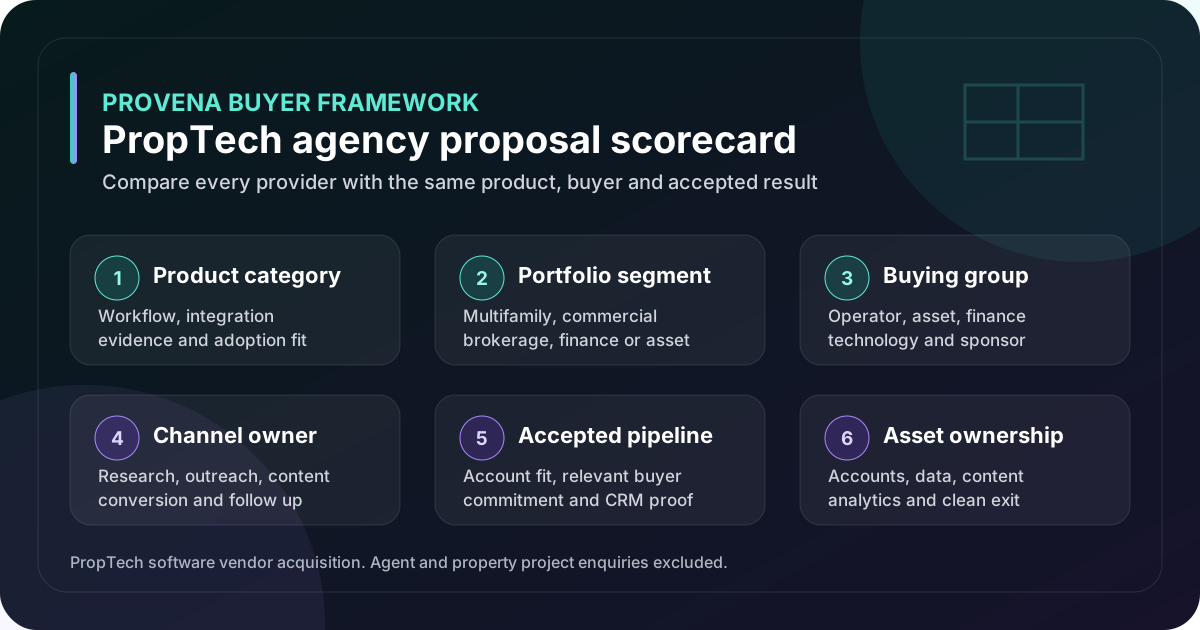
Provena PropTech agency selection framework. Compare every provider with the same product category, portfolio segment and accepted pipeline definition.
How should PropTech teams compare scope, price and accepted pipeline?
Provena publishes this comparison and sells a service included in it, so there is a direct commercial conflict. We do not name an overall winner. Provider scope comes from each company's official material, while fit, tradeoff and the six control scorecard are Provena editorial analysis.
Keep the customer acquisition task precise. This page covers companies selling property technology or real estate software to business buyers. It does not cover property leads for estate agents, brokerages, investors, developers or home service firms. The vertical SaaS sales guide explains the wider account and buying group discipline.
The reviewed providers own different work. Bay Leaf Digital and Leapyn publish broad marketing coverage. StarReach and Leadriver publish direct outbound and qualification. Bill Rice Strategy Group publishes an owned lead platform, strategy, search, content and fractional leadership. Compare that scope with the broader B2B SaaS demand generation agency comparison before deciding what is actually missing.
Bill Rice Strategy Group currently publishes a typical engagement from $8,000 to $15,000 a month. The other reviewed pages do not provide one equivalent public price that can be responsibly compared with it. Ask every provider to separate service fees, media, data, software, domains, mailboxes, creative, travel and internal client time before comparing commercial terms.
Performance statements on provider pages are self reported unless an independent audit is identified. Verify the named client, period, baseline, denominator, target market, attribution method and sales accepted result. A relevant case can support diligence, but it does not forecast another product or portfolio segment.
The FTC states that the CAN SPAM Act covers commercial email and has no business to business exception. It also says a company cannot contract away responsibility for messages sent on its behalf. Google publishes authentication, sender identity, spam rate and unsubscribe requirements. Name the client and provider owners for domains, approval, suppression and monitoring before outreach starts.
Use the scorecard below with one written product and market brief. Its purpose is to expose buyer fit, scope, evidence and ownership before a contract is signed. It is not an artificial agency rating.
Which PropTech lead generation agencies deserve a practical test?
Bay Leaf Digital: where does it fit?
Bay Leaf Digital publishes a specialist route for leasing, property operations, maintenance, tenant experience, smart buildings, brokerage, transaction platforms, real estate finance, construction, analytics, compliance and sustainability products. Its services include search, generative discovery, paid acquisition, content, website optimisation, automation and sales enablement. Ask which product category, buyer roles, media accounts, conversion assets and pipeline stages the proposed team will own. Suits PropTech and real estate SaaS companies seeking broad sector marketing across positioning, search, paid acquisition, content, conversion and lifecycle work. Strongest where a dedicated real estate SaaS route covering several property technology categories, buyer groups and full funnel marketing services matters. Test that the broad service boundary is a larger purchase than a contained direct outreach or appointment setting test.
StarReach: where does it fit?
StarReach describes a direct programme for property developers, real estate technology buyers, commercial operators, facilities firms and investment companies. It also publishes sales enablement and customer ownership of an internal playbook. Verify the exact account market, source data, sender domains, message approval, qualification record and evidence behind each attributed result. Suits PropTech companies prioritising direct cold email, LinkedIn prospecting, reply handling and sales enablement. Strongest where a dedicated PropTech lead generation service with account research, list building, sender setup, messaging, campaign management and handoff matters. Test that its published reply, meeting and pipeline figures are provider claims and require proposal level evidence before they can inform a forecast.
Bill Rice Strategy Group: where does it fit?
Bill Rice Strategy Group publishes a lead generation platform, a 90 day go to market sprint, search and content strategy, and fractional marketing leadership. Its current page states that typical engagements start from $8,000 to $15,000 a month. Confirm which assets are delivered, who performs direct outreach through any partner, which accounts remain client owned and what evidence determines the day 60 continuation decision. Suits series A through private equity owned real estate technology companies seeking senior positioning, an owned acquisition platform, search, content or fractional leadership. Strongest where a clear specialist boundary for companies selling transaction software, market data, artificial intelligence infrastructure, brokerage tools and related platforms into real estate matters. Test that the senior operator model and published monthly investment may exceed the needs of a team seeking one narrow outbound experiment.
Leadriver: where does it fit?
Leadriver publishes targeting across residential and commercial property organisations, portfolio size, geography and current systems. It names operations, property management and asset roles, then describes multichannel sequences, reply qualification and weekly reporting. Ask for a dated account sample, named delivery team, source records, suppression handling, lead acceptance fields and the exact additional work required to reach a confirmed meeting. Suits PropTech vendors seeking account mapping, cold email, LinkedIn, qualification and reporting across a defined property buyer market. Strongest where a dedicated outbound process that distinguishes qualified leads from its separate appointment setting service matters. Test that the public page is concise and its volume, campaign and result claims remain provider attributed, so the proposed evidence and acceptance rules need direct verification.
Leapyn: where does it fit?
Leapyn publishes a wide PropTech marketing service and stresses that one real estate audience cannot represent every buyer. Its page covers lead generation, search and answer discovery, paid acquisition, positioning, websites, video and fractional leadership. Ask which portfolio segment and buying group will receive separate messages, which channels and assets the client owns, and how reported leads become sales accepted opportunities. Suits PropTech companies seeking integrated strategy and execution across brand, search, paid media, content, video, websites, customer marketing and lead generation. Strongest where broad sector positioning that distinguishes agents, brokerages, investors, owners and operators and connects campaigns with revenue goals matters. Test that the full service scope can obscure the one constraint a company needs to change unless deliverables, accounts and accepted pipeline are written clearly.
Provena: where does it fit?
Provena is our own service, so this is a disclosed vendor statement. The model fits a PropTech company with a definable business buyer, a supportable product claim, clear implementation capacity and a sales owner ready to handle qualified conversations. Published results from other vertical SaaS markets demonstrate an operating method and do not forecast a property technology outcome. Suits vertical B2B PropTech teams needing a finite account market, verified business contacts, direct outreach, organic content, conversion and reply qualification in one learning loop. Strongest where one operating boundary across market research, cold email, LinkedIn, commercial content, conversion pages, qualification, CRM evidence and pipeline review matters. Test that provena has no published PropTech client case study and is not a full paid media department, property adviser, lending adviser or substitute for product and sales ownership.
Which PropTech agency fits which acquisition constraint?
The six agencies here split cleanly into marketing-led and outreach-led. The acquisition constraint decides which half to shortlist.
Agency
Led by
Fits when
Judge on
Bay Leaf Digital
Sector marketing across positioning, search and lifecycle
The company is unknown to its buyers
Search visibility and inbound quality
StarReach
Cold email, LinkedIn and reply handling
The segment is known and conversations are needed
Meetings per segment
Bill Rice Strategy Group
Senior positioning and an owned acquisition platform
Series A to private-equity owned companies repositioning
Pipeline from owned channels
Leadriver
Account mapping, outreach and reporting
A defined property buyer market to work systematically
Qualified meetings and coverage of the map
Leapyn
Integrated strategy and execution across channels
Teams wanting one partner for brand through lead generation
Attributed pipeline
Provena
Research, outreach, content and reply qualification as one system
A finite PropTech account market with a proven offer
Qualified meetings and segment learning
Whether each PropTech agency is marketing-led or outreach-led, when it fits, and what to judge it on.
Provena is on its own list and is disclosed. Ask any of the six for the property segments they have actually sold into, by name. That answer is worth more than the service page. The construction tech lead generation agencies comparison covers the build side of the same market, and the B2B appointment setting companies comparison covers partners that only book meetings.
How should a team introduce its chosen approach to PropTech lead generation agencies?
Test PropTech lead generation agencies against a representative workflow before committing. First test: Separate PropTech software vendor acquisition from property, tenant, investor, agent, brokerage or developer lead generation. Include ordinary records, difficult exceptions and the people who will own the system after selection.
Separate PropTech software vendor acquisition from property, tenant, investor, agent, brokerage or developer lead generation.
Define the product category, property workflow, target organisation, portfolio segment, geography, company size, systems and excluded accounts.
Map the daily user, workflow owner, asset or property leader, information technology, security, finance, procurement and executive sponsor where relevant.
Give every provider the same funnel baseline, target account sample, approved claims, sales capacity and sales accepted result.
Require the proposal to name research, data, messaging, channel, media, content, conversion, reply handling, qualification and CRM ownership.
Verify every performance claim through the client, period, baseline, denominator, target market, attribution method and accepted commercial outcome.
Confirm ownership of domains, mailboxes, media accounts, contact data, suppression records, content, analytics, audiences, CRM history and intellectual property.
Define a qualified meeting through account fit, a relevant buyer, an acknowledged workflow problem, a shared purpose, approved evidence and a specific next commitment.
Run a contained first phase with clean exit terms and review rejected accounts, replies, attendance, sales acceptance, opportunities and stage progression before expanding.
Record the decision about PropTech lead generation agencies in the campaign brief so the team can revisit it when evidence changes. Keep a dated change log so rules, features and assumptions can be reviewed without rebuilding the whole motion.
Which mistakes distort decisions about PropTech lead generation agencies?
Selection risk around PropTech lead generation agencies usually appears when a polished feature list replaces a real workflow test. Make the following failure modes visible before migration, procurement or a longer commitment.
Hiring an agent or property marketing provider when the actual customer is a business buying software.
Treating property managers, asset managers, facilities teams, brokerages, lenders, investors and developers as one audience.
Choosing the agency with the longest service list before identifying the exact acquisition constraint.
Buying a lead guarantee before defining account fit, relevant interest, qualification, meeting attendance and sales acceptance.
Using a provider case study as a forecast without checking its client, period, baseline, denominator, market and attribution.
Repeating unsupported product claims about returns, occupancy, compliance, energy, integration or artificial intelligence.
Leaving domains, contact data, suppression records, content, media accounts, analytics or CRM evidence under unclear ownership.
Scaling activity while implementation evidence, reply handling, demonstration quality or sales follow through remains weak.
Product capabilities and policies affecting PropTech lead generation agencies change. Verify the current documentation, run a contained test and judge the result against your own workflow before committing.
How should teams measure progress with PropTech lead generation agencies?
Measure the route from a source verified property organisation to an accepted commercial outcome. Record relevant accounts, valid business roles, replies, qualified conversations, attended meetings, sales accepted opportunities, pipeline created, stage conversion, time to response and rejection reasons. Review performance by product category, portfolio segment, company size, buyer role, signal, message and channel. Keep consumer property enquiries outside this reporting. Provider activity should explain commercial progression rather than replace it. Agree attribution and acceptance rules before launch.
Where can Provena support work involving PropTech lead generation agencies?
Provena can support PropTech and real estate software vendors with market research, verified business contacts, cold email, LinkedIn, organic content, conversion pages, reply qualification and pipeline review under one operating owner. It does not replace product evidence, implementation capacity, qualified legal or property advice, paid media specialists or the client sales team. Discovery should confirm the product category, account market, supportable claim, sales capacity and contained first test before a programme is proposed. For PropTech lead generation agencies, Provena builds the research, data, messaging and operating loop around the chosen route. The goal is not more activity for its own sake. It is a controlled system that creates relevant conversations and shows clearly what should change next. See the property technology outbound service and review Provena case studies before deciding whether support is appropriate.
Which sources should guide a shortlist for PropTech lead generation agencies?
Provider scope, pricing and case material use current first party pages reviewed on 29 August 2026. Outreach boundaries use current FTC and Google guidance. Each provider controls its own claims and can change its services or commercial terms. Comparative fit, the six control scorecard and buyer recommendations are independent Provena editorial analysis. The primary references used for this article are Bay Leaf Digital, StarReach, Bill Rice Strategy Group, Leadriver, Leapyn, Provena property technology outbound service, FTC CAN SPAM compliance guide, Google email sender guidelines, last reviewed on 19 October 2026. This guide is desk research on Bay Leaf Digital, StarReach and the other options from those materials, not a hands-on trial of each; where Provena has run a PropTech lead generation agencies workflow itself, it says so. Reopen each reference before a material decision.
Frequently asked questions
How do PropTech companies generate B2B leads?
+
By treating the property market as several markets: property managers, owners and asset managers, brokerages, developers and lenders each buy differently and rarely from the same vendor. The working motions are direct outreach to a mapped account list per segment, content that answers the operator's question, and partnerships with the platforms those operators already use. Bay Leaf, Bill Rice Strategy Group and Leapyn lead with positioning, search and integrated marketing; StarReach, Leadriver and Provena run the direct outreach layer, and Provena is our own service.
What makes lead generation for real estate software different?
+
The buyer is often an operator with a small office and a large portfolio, so the decision maker is reachable but busy, and the software has to integrate with property accounting the buyer will not replace. Sales cycles follow leasing and budgeting seasons. And the segment boundaries matter: a tool for multifamily managers is irrelevant to a commercial brokerage, so a generic real estate list produces polite declines. Agencies that have worked the sector know the segments; ask them to name the ones they have sold into.
Should a PropTech startup use an outbound agency or a marketing agency?
+
Outbound when the company can name the segment and needs conversations now; marketing when the company is unknown and the buyer searches before talking to anyone. Early-stage PropTech usually needs outbound first, because the learning about which segment converts comes from replies, not from search data. Once a segment and message are proven, positioning and search compound them. Buying a brand programme before the segment is known produces a beautiful site for the wrong buyer.
Which risk should teams watch with PropTech lead generation agencies?
+
Two, for PropTech lead generation agencies. First: Hiring an agent or property marketing provider when the actual customer is a business buying software. Second: Treating property managers, asset managers, facilities teams, brokerages, lenders, investors and developers as one audience.
How can Provena support work around PropTech lead generation agencies?
+
Provena can support PropTech and real estate software vendors with market research, verified business contacts, cold email, LinkedIn, organic content, conversion pages, reply qualification and pipeline review under one operating owner. It does not replace product evidence, implementation capacity, qualified legal or property advice, paid media specialists or the client sales team. Discovery should confirm the product category, account market, supportable claim, sales capacity and contained first test before a programme is proposed. For work on PropTech lead generation agencies, review Provena's property technology outbound service and confirm fit in a conversation before choosing support.
Research briefing
Join the Vertical SaaS Growth Briefing
Receive new research on niche market selection, buyer intent, customer acquisition and qualified pipeline for B2B software teams.
Turn this research into qualified pipeline.
Thirty minutes on your market, your pipeline constraint and the next practical step, including where Provena does not fit.