Best EdTech Lead Generation Agencies 2026 Compared
The short answer
EdTech is not one buyer market. A K-12 learning platform, higher education system and corporate learning product reach different institutions, buying groups, budget cycles and evidence standards. Separate software vendor acquisition from student enrolment and course promotion before comparing agencies. Then define the institution segment, procurement route, implementation evidence, privacy boundary and accepted pipeline result. No provider is best for every education technology company.
Each company links to an official product page or primary source relevant to this guide. Monogram tiles identify the referenced organisation and do not imply endorsement.
The best EdTech lead generation agencies for a practical shortlist are SalesHive, Callbox, Caffeine Marketing, Martal Group, Responsify, Content RevOps and Provena. SalesHive and Martal centre direct sales development. Callbox publishes wider multichannel lead generation. Caffeine Marketing connects demand generation with institutional procurement. Responsify focuses inbound content and marketing operations. Provena connects account research, outbound, organic content, conversion and qualification. Choose by institution segment, channel boundary, procurement evidence and the sales accepted next step.
Which EdTech lead generation agency fits the actual institutional buyer route?
Live results combine outsourced sales development, multichannel lead generation, broad demand generation and inbound content services. They also mix institutional software sales with learner acquisition. A district, individual school, university system and corporate learning team do not buy through one route, even when each product is described as EdTech. The answer must fit the buyer, the people doing the work and the evidence available after launch. A fashionable platform or generic checklist cannot repair weak targeting or unclear ownership.
Write one acquisition brief that names the education product, institution segment, geography, account unit, buying committee, budget window, procurement route, implementation boundary, approved evidence and sales accepted result. Exclude learner, parent and student enquiries unless they are the actual customer model. Write the desired business outcome first, then define what must be true for it to occur and which risks require a human decision.
Which criteria matter when assessing EdTech lead generation agencies?
We reviewed live search results and current official provider pages on 29 August 2026. Inclusion required a clear EdTech or education technology service route and enough first party detail to identify the buyer, channel boundary or operating model. We compared published scope, buyer fit, qualification, procurement awareness, evidence and asset ownership. We excluded directories, paid rankings, affiliate lists and unsupported universal scores. For EdTech lead generation agencies, we used documented capability and practical fit. No paid placement, invented scores or unsupported performance claims were used. Check current pricing and packaging directly.
Choice
Best fit
Core strength
Main tradeoff
SalesHive
EdTech vendors seeking direct phone and email sales development into United States K-12 districts and higher education institutions
a dedicated EdTech route with list building, account mapping, cold calling, email and meeting qualification across academic, technology, finance and procurement roles
the published model centres direct sales development rather than a complete paid, organic or lifecycle marketing department, and its outcome figures require direct verification
Callbox
education technology vendors seeking a broad multichannel programme across regions, institutions and corporate learning markets
published EdTech coverage across account research, email, phone, LinkedIn, events, content and lead nurturing
the broad operating boundary and published performance statements need proposal level confirmation by region, channel, institution type and accepted result
Caffeine Marketing
established EdTech and digital learning companies seeking positioning, demand generation, content, account based marketing and conversion support
a dedicated vertical route that recognises institutional procurement, committee decisions, budget timing and pilot to purchase progression
a demand generation engagement is different from a contained outsourced sales development test and requires clear ownership of content, media, systems and sales handoff
Martal Group
EdTech vendors and education service providers seeking outsourced sales development across districts, higher education and training markets
dedicated education lead generation with account targeting, intent signals, direct outreach and appointment work
the education category spans software, programmes, content and services, so the target product, account unit and buyer route must be narrowed in the proposal
published EdTech experience, inbound services and education software case material focused on attracting and educating buyers
inbound content compounds over time and does not provide the same immediate direct conversation model as an outsourced SDR programme
Content RevOps
EdTech and education companies with long, trust led buying cycles that need buyer guides, webinars and decision tools tied to CRM tracking and follow up
published education case material, including a demand rebuild for K-12 EdTech company Ori Learning, which sells to United States school districts
a content and demand system compounds over months and does not replace direct outreach to a finite institutional account list
Provena
vertical B2B EdTech teams needing a finite institutional account market, verified business contacts, direct outreach, organic content, conversion and reply qualification in one learning loop
one operating boundary across market research, cold email, LinkedIn, commercial content, conversion pages, qualification, CRM evidence and pipeline review
Provena has no published EdTech client case study and is not a student recruitment agency, education procurement adviser, privacy counsel, paid media department or substitute for product and sales ownership
A practical comparison for EdTech lead generation agencies, from each option's public materials.
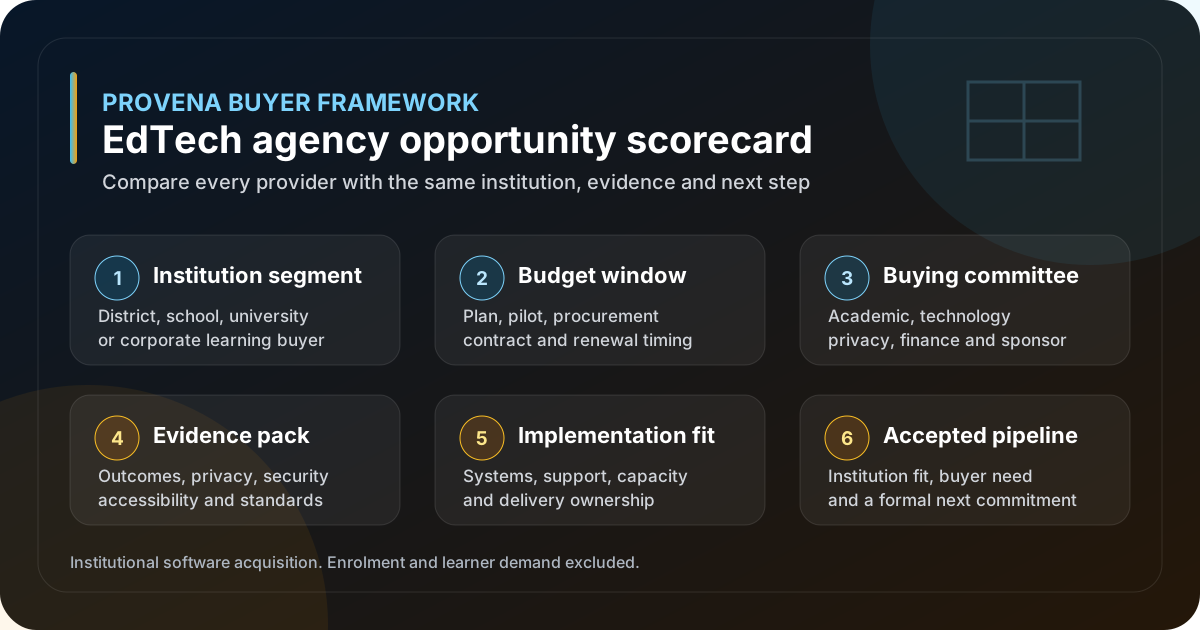
Provena EdTech opportunity acceptance framework. Compare every provider with the same institution, evidence and next step definition.
How should EdTech teams compare agency scope with institutional buying evidence?
Provena publishes this comparison and sells a service included in it, so there is a direct commercial conflict. We do not name an overall winner. Provider scope comes from each company's official material, while fit, tradeoff and the opportunity acceptance record are Provena editorial analysis.
Keep the acquisition task precise. This page covers companies selling education technology or learning software to institutions and business buyers. It does not compare agencies for student recruitment, course enrolment or consumer learning subscriptions. The vertical SaaS sales guide covers the wider account and buying group discipline.
SalesHive and Martal publish direct sales development for education markets. Callbox publishes multichannel lead generation. Caffeine Marketing publishes demand generation for EdTech and digital learning. Responsify publishes inbound marketing services and EdTech experience. Content RevOps publishes a content and demand system with education case material. Compare those operating models with the broader B2B SaaS demand generation agency comparison before deciding which function is missing.
The United States Department of Education publishes resources for technology vendors that collect or use student personally identifiable information. Its guidance explains that schools may require approved use, direct control, limited purposes and appropriate security practice. Treat privacy evidence as a product and procurement responsibility. An outreach agency should not invent legal conclusions or request student records to create a prospect list.
1EdTech publishes procurement guidance for certified products and standards such as LTI and OneRoster. Not every education product needs every standard. Ask the vendor and institution which learning, roster, identity, assessment, credential or accessibility requirements apply, then make current certification and implementation evidence available to the buying group.
Provider performance figures remain self reported unless an independent audit is identified. Verify the named client, period, baseline, denominator, target institution, attribution method and sales accepted result. A relevant education case can support diligence, but it does not forecast another product or procurement cycle.
The FTC states that the CAN SPAM Act covers commercial email and has no business to business exception. Google publishes authentication, sender identity, spam rate and unsubscribe requirements. Name the client and provider owners for domains, approval, suppression and monitoring before outreach starts.
Use the scorecard below with one written product and institutional market brief. It records whether a provider created a credible route into a buying decision. It is not an artificial agency rating or a substitute for the institution's procurement process.
Which EdTech lead generation agencies deserve a practical test?
SalesHive: where does it fit?
SalesHive publishes an EdTech programme for companies selling into districts and higher education. Its current page maps superintendents, curriculum leaders, technology leaders, business officials and procurement. Ask for the exact account universe, contact source, academic timing, named delivery team, qualification fields and evidence behind every provider attributed outcome. Suits EdTech vendors seeking direct phone and email sales development into United States K-12 districts and higher education institutions. Strongest where a dedicated EdTech route with list building, account mapping, cold calling, email and meeting qualification across academic, technology, finance and procurement roles matters. Test that the published model centres direct sales development rather than a complete paid, organic or lifecycle marketing department, and its outcome figures require direct verification.
Callbox: where does it fit?
Callbox publishes a dedicated education technology service covering schools, districts, higher education, learning platforms, certification providers and corporate training. Ask which named channels, regions, staff, media, event assets and pipeline stages are included, then separate attributed provider claims from evidence observed in the client CRM. Suits education technology vendors seeking a broad multichannel programme across regions, institutions and corporate learning markets. Strongest where published EdTech coverage across account research, email, phone, LinkedIn, events, content and lead nurturing matters. Test that the broad operating boundary and published performance statements need proposal level confirmation by region, channel, institution type and accepted result.
Caffeine Marketing: where does it fit?
Caffeine Marketing publishes work for education technology platforms, learning management systems, corporate training products and digital learning providers. Its stated model addresses institutional and corporate buyers. Ask how the proposed team will separate those markets, support product evidence and turn campaign engagement into a sales accepted institutional opportunity. Suits established EdTech and digital learning companies seeking positioning, demand generation, content, account based marketing and conversion support. Strongest where a dedicated vertical route that recognises institutional procurement, committee decisions, budget timing and pilot to purchase progression matters. Test that a demand generation engagement is different from a contained outsourced sales development test and requires clear ownership of content, media, systems and sales handoff.
Martal Group: where does it fit?
Martal publishes a dedicated education lead generation service for EdTech platforms, learning management systems, school solutions, higher education and workforce learning. Verify the actual delivery region, institution sample, buying committee, outbound channels, qualification record, meeting acceptance rule and the source of any intent signal used. Suits EdTech vendors and education service providers seeking outsourced sales development across districts, higher education and training markets. Strongest where dedicated education lead generation with account targeting, intent signals, direct outreach and appointment work matters. Test that the education category spans software, programmes, content and services, so the target product, account unit and buyer route must be narrowed in the proposal.
Responsify: where does it fit?
Responsify publishes an EdTech route alongside content, search, email, automation and website services. Its education technology material includes inbound case evidence. Ask which current people will produce subject accurate content, how buyer and institution fit are verified, which HubSpot assets the client owns and how an inbound contact becomes an accepted sales opportunity. Suits EdTech companies prioritising inbound strategy, expert content, search, email nurturing and HubSpot marketing operations. Strongest where published EdTech experience, inbound services and education software case material focused on attracting and educating buyers matters. Test that inbound content compounds over time and does not provide the same immediate direct conversation model as an outsourced SDR programme.
Content RevOps: where does it fit?
Content RevOps publishes a content and demand generation system for B2B companies with long sales, covering the guides, webinars and decision tools buyers check before they call, plus the CRM, tracking and follow up that tie each piece to the sales record. Its published rates run from $4,100 to $8,500 a month. Its Ori Learning case reports organic traffic up 4,500%, inbound leads up 514% and 32 sales qualified leads in the first month. Its King's College London case, a content led microsite for online master's programmes, reports organic traffic up 164%, cost per lead down from £320 to £185 and about 285 attributable enrolments, although that is learner enrolment rather than institutional software sales. Both figures are provider reported. Ask which institution segment the system targets, how a content lead becomes an accepted institutional opportunity and which content and CRM assets the client owns. Suits EdTech and education companies with long, trust led buying cycles that need buyer guides, webinars and decision tools tied to CRM tracking and follow up. Strongest where published education case material, including a demand rebuild for K-12 EdTech company Ori Learning, which sells to United States school districts matters. Test that a content and demand system compounds over months and does not replace direct outreach to a finite institutional account list.
Provena: where does it fit?
Provena is our own service, so this is a disclosed vendor statement. The model fits an education software company with a definable institutional buyer, supportable product evidence, clear implementation capacity and a sales owner ready to handle qualified conversations. Published results from other vertical SaaS markets demonstrate an operating method and do not forecast an EdTech outcome. Suits vertical B2B EdTech teams needing a finite institutional account market, verified business contacts, direct outreach, organic content, conversion and reply qualification in one learning loop. Strongest where one operating boundary across market research, cold email, LinkedIn, commercial content, conversion pages, qualification, CRM evidence and pipeline review matters. Test that provena has no published EdTech client case study and is not a student recruitment agency, education procurement adviser, privacy counsel, paid media department or substitute for product and sales ownership.
Which agency model fits each EdTech segment and channel need?
The seven agencies differ on channel and on how close they sit to institutional procurement. Match them to the segment and the function the vendor lacks.
Vendor situation
Fitting model
Agency whose published scope fits
Evidence to request
Needs phone and email sales development at volume
Direct SDR outsourcing
SalesHive, Martal Group
Accepted meetings by institution type
Wants several channels run by one partner
Multichannel lead generation
Callbox
Channel-level qualification standard
Sells into institutions with formal procurement
Demand generation tied to procurement
Caffeine Marketing
Procurement-stage evidence
Needs inbound content and marketing operations
Inbound and operations
Responsify
Qualified inbound by segment
Needs guides, webinars and decision tools for a long, trust led decision
Content led demand system
Content RevOps
Accepted institutional opportunities from content
Needs research, outbound, content, conversion and qualification connected
How should a team introduce its chosen approach to EdTech lead generation agencies?
Test EdTech lead generation agencies against a representative workflow before committing. First test: Separate institutional EdTech software acquisition from learner, parent, course and student enrolment demand. Include ordinary records, difficult exceptions and the people who will own the system after selection.
Separate institutional EdTech software acquisition from learner, parent, course and student enrolment demand.
Define the product category, institution segment, geography, account unit, existing systems and excluded accounts.
Map the daily user, academic owner, technology owner, privacy and security reviewers, finance, procurement and executive sponsor where relevant.
Record the planning, budget, pilot, request for proposal, board, contract, implementation and renewal windows that control the next decision.
Prepare current evidence for learning or operating outcomes, implementation, privacy, security, accessibility, support and applicable interoperability standards.
Give every provider the same account sample, buying group, evidence pack, sales capacity and sales accepted result.
Require the proposal to name research, data, messaging, channel, content, conversion, reply handling, qualification and CRM ownership.
Define an accepted EdTech opportunity through institution fit, a relevant buyer, an acknowledged need, a known procurement route, approved evidence and a specific formal next commitment.
Confirm ownership of domains, mailboxes, contact data, suppression records, content, analytics, audiences, CRM history and intellectual property.
Run a contained first phase with clean exit terms and review rejected accounts, replies, attendance, sales acceptance, procurement progress, opportunities and stage progression before expanding.
Record the decision about EdTech lead generation agencies in the campaign brief so the team can revisit it when evidence changes. Keep a dated change log so rules, features and assumptions can be reviewed without rebuilding the whole motion.
Which mistakes distort decisions about EdTech lead generation agencies?
Selection risk around EdTech lead generation agencies usually appears when a polished feature list replaces a real workflow test. Make the following failure modes visible before migration, procurement or a longer commitment.
Hiring a student enrolment or consumer education agency when the actual customer is an institution buying software.
Treating individual schools, districts, universities, corporate learning teams and training providers as one account market.
Starting outreach after the budget, pilot or formal procurement route is already closed for the relevant cycle.
Buying a lead guarantee before defining institution fit, buying role, procurement stage, meeting acceptance and sales ownership.
Publishing learning outcome, privacy, security, accessibility or interoperability claims without current evidence and a named review owner.
Using a provider attributed case study as a guaranteed forecast for a different product, institution segment or academic year.
Collecting student or learner information when the campaign only needs public business account and professional contact evidence.
Leaving domains, contact data, suppression records, content, analytics or CRM evidence under unclear ownership.
Scaling activity while implementation evidence, reply handling, demonstration quality or sales follow through remains weak.
Product capabilities and policies affecting EdTech lead generation agencies change. Verify the current documentation, run a contained test and judge the result against your own workflow before committing.
How should teams measure progress with EdTech lead generation agencies?
Measure the route from a source verified institution to an accepted commercial outcome. Record relevant accounts, valid business roles, replies, qualified conversations, attended meetings, procurement stage, sales accepted opportunities, pipeline created, stage conversion, time to response and rejection reasons. Review performance by education segment, institution size, geography, buying role, budget window, message and channel. Keep learner and enrolment enquiries outside institutional pipeline reporting. Provider activity should explain commercial progression rather than replace it. Agree attribution and acceptance rules before launch.
Where can Provena support work involving EdTech lead generation agencies?
Provena can support EdTech and education software vendors with market research, verified business contacts, cold email, LinkedIn, organic content, conversion pages, reply qualification and pipeline review under one operating owner. It does not replace product evidence, implementation capacity, qualified privacy or procurement advice, paid media specialists or the client sales team. Discovery should confirm the education segment, institutional account market, supportable claim, sales capacity and contained first test before a programme is proposed. For EdTech lead generation agencies, Provena builds the research, data, messaging and operating loop around the chosen route. The goal is not more activity for its own sake. It is a controlled system that creates relevant conversations and shows clearly what should change next. See the B2B SaaS lead generation service and review Provena case studies before deciding whether support is appropriate.
Which sources should guide a shortlist for EdTech lead generation agencies?
What are the best lead generation agencies for EdTech?
+
A practical shortlist is SalesHive, Callbox, Caffeine Marketing, Martal Group, Responsify, Content RevOps and Provena, and they do different jobs. SalesHive and Martal Group centre direct sales development by phone and email; Callbox publishes broad multichannel lead generation; Caffeine Marketing connects demand generation with institutional procurement; Responsify focuses on inbound content and marketing operations; Provena connects account research, outbound, organic content, conversion and qualification. Choose by institution segment, channel boundary, procurement evidence and the sales-accepted next step.
How do you generate leads for an EdTech company?
+
Segment by institution type first, because a K-12 district, a community college and a university buy through different people, budgets and calendars. Build a finite, researched account list per segment with the decision maker and the procurement route recorded, open with the instructional or operational problem the product solves, and time outreach to budget and adoption cycles. Support outbound with content that answers the evaluation questions institutions ask, and measure sales-accepted meetings by segment, not lead volume.
How do schools and universities buy software?
+
Through a defined route that varies by segment: districts through curriculum or technology leadership with board and procurement approval, often on an annual budget cycle; higher education through departments or central IT with committee review, RFPs above a threshold and security assessments. Vendors that map the route per segment and prepare procurement evidence, security answers and pilot terms before outreach shorten the cycle; vendors that treat every institution as one buyer stall at the first committee.
Which risk should teams watch with EdTech lead generation agencies?
+
Two, for EdTech lead generation agencies. First: Hiring a student enrolment or consumer education agency when the actual customer is an institution buying software. Second: Treating individual schools, districts, universities, corporate learning teams and training providers as one account market.
How can Provena support work around EdTech lead generation agencies?
+
Provena can support EdTech and education software vendors with market research, verified business contacts, cold email, LinkedIn, organic content, conversion pages, reply qualification and pipeline review under one operating owner. It does not replace product evidence, implementation capacity, qualified privacy or procurement advice, paid media specialists or the client sales team. Discovery should confirm the education segment, institutional account market, supportable claim, sales capacity and contained first test before a programme is proposed. For work on EdTech lead generation agencies, review Provena's B2B SaaS lead generation service and confirm fit in a conversation before choosing support.
Research briefing
Join the Vertical SaaS Growth Briefing
Receive new research on niche market selection, buyer intent, customer acquisition and qualified pipeline for B2B software teams.
Turn this research into qualified pipeline.
Thirty minutes on your market, your pipeline constraint and the next practical step, including where Provena does not fit.