Best Legal Tech Marketing Agencies to Assess in 2026
The short answer
Legal technology vendor marketing is not law firm consumer marketing. Define whether the constraint is positioning, organic discovery, demand generation, public relations, direct buyer conversations or sales handoff. Then compare providers using the same target segment, legal workflow, evidence standard and accepted pipeline definition. No agency is best for every legal technology company.
Each company links to an official product page or primary source relevant to this guide. Monogram tiles identify the referenced organisation and do not imply endorsement.
A practical legal tech marketing agency shortlist includes Legal Tech Media Group, Bay Leaf Digital, Caffeine Marketing, Clickstrike and Provena. Their service boundaries differ. Legal Tech Media Group and Bay Leaf Digital publish broad marketing capability, Caffeine Marketing focuses demand generation for legal technology and professional services technology, Clickstrike focuses public relations and influencer work for AI legal technology, and Provena connects account research, outbound, organic content and conversion. Choose by the missing function, legal buyer evidence and accepted pipeline responsibility.
Which legal tech marketing agency fits the growth constraint?
A contract platform selling to corporate legal operations, an electronic discovery product selling to litigation teams and an AI research product selling to law firms face different buying groups and evidence burdens. A useful agency must understand the actual workflow, user, risk reviewer and economic sponsor rather than treating legal technology as one audience. Name one target legal market, one workflow, one commercial constraint and one accepted pipeline outcome before comparing provider scope.
Which criteria matter when assessing legal tech marketing agencies?
We reviewed each provider using its current official service material on 28 August 2026. We compared published legal technology focus, channel scope, stated buyer fit, sales handoff and evidence boundary. We did not use paid rankings, universal scores or unverified outcome claims. The review uses official documentation and independent practical analysis.
Choice
Best fit
Core strength
Main tradeoff
Legal Tech Media Group
legal technology vendors seeking broad sector specific marketing strategy and execution
published scope across strategy, tactical execution, HubSpot, automation, demand generation and answer engine visibility
a broad integrated remit may exceed the needs of a team seeking only direct outbound or one specialist channel
Bay Leaf Digital
legal technology SaaS teams seeking a wider digital marketing programme
published capability across messaging, search, paid media, content, conversion, automation, analytics and sales enablement
a multi channel marketing programme requires clear internal ownership and a defined handoff into sales
Caffeine Marketing
legal technology and professional services technology teams prioritising demand generation
published vertical focus on legal technology platforms, practice management, professional services automation and related systems
buyers still need to verify the proposed delivery team, relevant evidence and exact channel boundary
Clickstrike
AI legal technology companies preparing launches, validation stories and credibility campaigns
specialist published scope in public relations and influencer work for AI legal technology
public relations and influencer coverage do not replace account research, sales qualification or a complete outbound system
Provena
legal technology vendors needing direct buyer conversations connected with organic discovery and conversion infrastructure
one operating loop across market research, verified contacts, cold email, LinkedIn, commercial content, conversion pages and reply qualification
Provena is not positioned as a full paid media or legal public relations department, and scope is set after discovery
A practical comparison for legal tech marketing agencies, from each option's public materials.
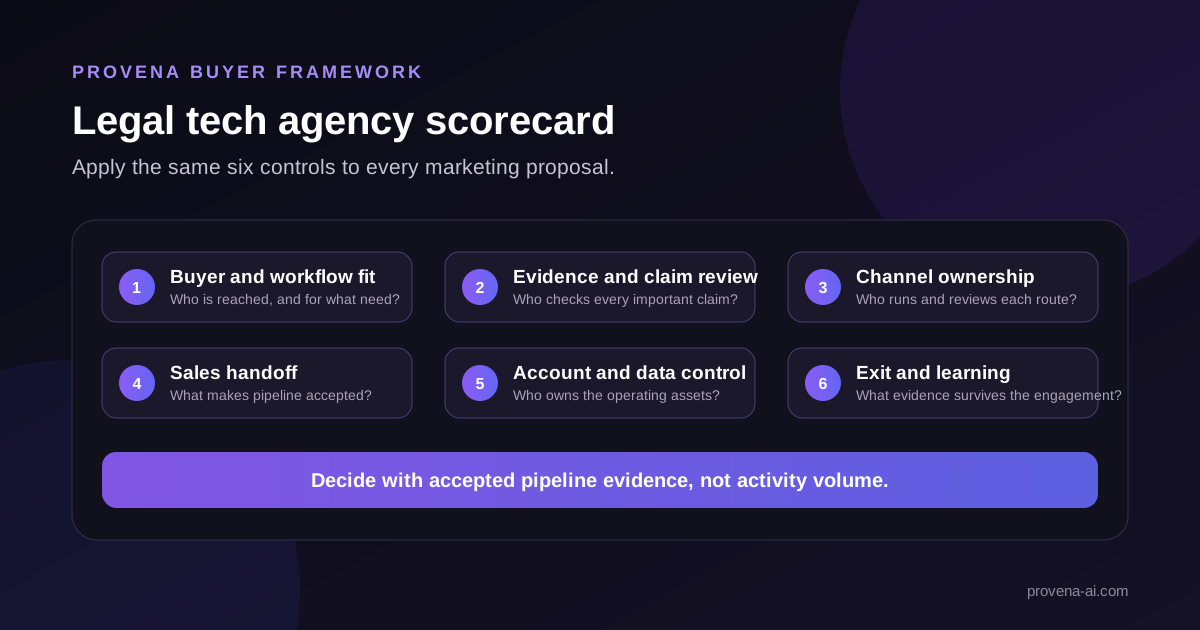
Provena legal technology marketing agency evaluation framework. Apply the same six controls to every proposal before comparing activity or price.
What does each legal tech marketing provider actually own?
Provena publishes this comparison and is included in it, so there is a direct commercial conflict. We do not name an overall winner. Provider scope is attributed to current official service material. Fit and tradeoff judgements are Provena editorial analysis.
Score each proposal from zero to two on the six controls below. Zero means the contract is silent, one means the answer is partial and two means ownership and evidence are explicit. The total is a discussion tool, not a forecast. Any zero on claim review, account ownership or data control should be resolved before work begins.
Which legal tech marketing agencies deserve a practical test?
Legal Tech Media Group: where does it fit?
Legal Tech Media Group describes itself as a full service agency for legal technology companies. Its current material names legal AI, electronic discovery, contract lifecycle management, legal operations, practice management, litigation support and legal research technology. Ask which named team owns each proposed workstream and how activity becomes accepted pipeline. Suits legal technology vendors seeking broad sector specific marketing strategy and execution. Strongest where published scope across strategy, tactical execution, HubSpot, automation, demand generation and answer engine visibility matters. Test that a broad integrated remit may exceed the needs of a team seeking only direct outbound or one specialist channel.
Bay Leaf Digital: where does it fit?
Bay Leaf Digital presents legal technology marketing inside its broader B2B SaaS practice. Its official material addresses attorneys, legal operations and in house counsel. Buyers should ask which legal technology evidence supports the proposed message and how each channel connects to a sales accepted opportunity. Suits legal technology SaaS teams seeking a wider digital marketing programme. Strongest where published capability across messaging, search, paid media, content, conversion, automation, analytics and sales enablement matters. Test that a multi channel marketing programme requires clear internal ownership and a defined handoff into sales.
Caffeine Marketing: where does it fit?
Caffeine Marketing positions its legal technology work around demand generation for conservative professional services buyers. A useful proposal should identify the target buying group, proof needed at each stage, channel owners and the commercial event that moves a response into the sales process. Suits legal technology and professional services technology teams prioritising demand generation. Strongest where published vertical focus on legal technology platforms, practice management, professional services automation and related systems matters. Test that buyers still need to verify the proposed delivery team, relevant evidence and exact channel boundary.
Clickstrike: where does it fit?
Clickstrike focuses its official legal technology service on public relations and influencer channels. It may fit a company with credible validation, product launches or named adoption evidence. Confirm editorial boundaries, disclosure, asset rights and how earned attention will be captured and developed by the internal revenue team. Suits AI legal technology companies preparing launches, validation stories and credibility campaigns. Strongest where specialist published scope in public relations and influencer work for AI legal technology matters. Test that public relations and influencer coverage do not replace account research, sales qualification or a complete outbound system.
Provena: where does it fit?
Provena is our own service, so treat this as a disclosed vendor statement. The model fits a finite legal technology market where the immediate need is to identify the right firms or legal departments, reach the relevant buying group and connect replies with useful evidence and qualified pipeline. Suits legal technology vendors needing direct buyer conversations connected with organic discovery and conversion infrastructure. Strongest where one operating loop across market research, verified contacts, cold email, LinkedIn, commercial content, conversion pages and reply qualification matters. Test that provena is not positioned as a full paid media or legal public relations department, and scope is set after discovery.
Which agency boundary fits each legal tech vendor's missing function?
The five agencies publish different service boundaries. Match the boundary to the function the vendor lacks.
Missing function
Fitting boundary
Agency whose published scope fits
Evidence to require
Broad marketing execution across channels
Full-service legal marketing
Legal Tech Media Group, Bay Leaf Digital
Legal-market results by channel
Demand generation for legal and professional services technology
How should a team introduce its chosen approach to legal tech marketing agencies?
Test legal tech marketing agencies against a representative workflow before committing. First test: Define the legal market, workflow, buyer group, offer, current constraint and accepted pipeline outcome. Include ordinary records, difficult exceptions and the people who will own the system after selection.
Define the legal market, workflow, buyer group, offer, current constraint and accepted pipeline outcome.
Give every provider the same account sample, evidence pack, internal capability map and commercial objective.
Require named delivery staff, channel ownership, subject review, claim review and sales handoff in the proposal.
Confirm who owns domains, advertising accounts, analytics, content, contact data, suppression records and creative assets.
Run a contained first phase with an agreed review point, stop condition and evidence that sales accepts.
Review rejected leads, lost opportunities, buyer objections and channel evidence before adding budget or activity.
Which mistakes distort decisions about legal tech marketing agencies?
Selection risk around legal tech marketing agencies usually appears when a polished feature list replaces a real workflow test. Make the following failure modes visible before migration, procurement or a longer commitment.
Confusing marketing a legal technology vendor with consumer marketing for a law firm.
Treating a provider list or logo page as proof of fit for the target legal workflow.
Accepting lead volume while sales acceptance, opportunity quality and feedback remain undefined.
Publishing legal, security or product claims without a named review and source process.
Leaving accounts, content, data, suppression records or exit rights under unclear ownership.
This discussion of legal tech marketing agencies is general operational information, not legal advice. Rules vary by jurisdiction, product, channel and audience. Ask qualified counsel to review your facts before launch.
How should teams measure progress with legal tech marketing agencies?
Measure the nearest accepted commercial outcome. Record target account engagement, qualified conversations, sales accepted opportunities, sourced and influenced pipeline, conversion by stage, time to acceptance and reasons for rejection. Track organic discovery, paid response, public relations reach and outbound activity as explanations, not substitutes for pipeline. Write the attribution and sales stage rules before the agency begins.
Where can Provena support work involving legal tech marketing agencies?
Provena fits legal technology teams that need researched target firms or legal departments, verified contacts, direct outreach, commercial content, conversion pages and reply qualification operated as one pipeline system. It is not the automatic choice when the primary need is paid media buying or legal trade public relations. The discovery process should make that fit or mismatch explicit. Review the legal technology go to market service and Provena case studies before deciding whether support fits.
Which sources should guide a shortlist for legal tech marketing agencies?
It markets software and services to law firms and legal departments, which means understanding how lawyers evaluate technology, who decides in a firm, and which channels and events the legal market trusts. The five agencies in this guide have different boundaries: Legal Tech Media Group and Bay Leaf Digital publish broad marketing capability; Caffeine Marketing focuses demand generation for legal and professional services technology; Clickstrike focuses public relations and influencer work for AI legal technology; Provena connects account research, outbound, organic content and conversion. Choose by the missing function and the accepted pipeline the agency will own.
How do you market software to law firms?
+
Segment by firm size and practice area, because a solo practitioner, a mid-sized litigation firm and an AmLaw firm buy differently and through different people. Lead with the workflow the product changes in the lawyer's terms, prove security and confidentiality handling early, use the evaluation questions firms actually ask as your content, and reach decision makers directly with researched outreach alongside the events and publications the market reads. Generic software marketing reads as noise to lawyers.
Should a legal tech company hire an agency or build marketing in-house?
+
Hire an agency for the function that is missing and time-bound: demand generation, PR, or a researched outbound motion. Build in-house for the functions that need legal-market depth over years: positioning, product marketing and customer evidence. Whichever route, fix ownership of content, accounts and data, define the qualification standard for pipeline the agency reports, and judge on accepted opportunities from legal buyers, not on impressions.
Which risk should teams watch with legal tech marketing agencies?
+
Two, for legal tech marketing agencies. First: Confusing marketing a legal technology vendor with consumer marketing for a law firm. Second: Treating a provider list or logo page as proof of fit for the target legal workflow.
How can Provena support work around legal tech marketing agencies?
+
Provena fits legal technology teams that need researched target firms or legal departments, verified contacts, direct outreach, commercial content, conversion pages and reply qualification operated as one pipeline system. It is not the automatic choice when the primary need is paid media buying or legal trade public relations. The discovery process should make that fit or mismatch explicit. For work on legal tech marketing agencies, review Provena's legal technology go to market service and confirm fit in a conversation before choosing support.
Research briefing
Join the Legal Technology Growth Briefing
Receive new research on firm segmentation, legal technology buyers, commercial evidence and qualified pipeline.
Selling into law firms or legal departments?
We define the firms worth reaching, verify the buying group and turn product evidence into conversations. Thirty minutes on the proof a firm will accept.